Introduction
Kenya enacted a legislation to govern the production, distribution, and application of seeds and plant varieties vide the Seeds and Plant Varieties Act (2012). Enforcement of this legislation was vested on the Kenya Plant Health Inspectorate Service (KEPHIS).
The Act stipulates that only seeds and plant varieties that have been certified by KEPHIS alone or in conjunction with other government agency can be sold or disseminated (Clause 11 of the Act) in the country.
It is agreeable that the government of Kenya may have enacted this clause in pursuit of legitimate policy objective. The certification procedure ensures that the seed and plant varieties being disseminated or sold meet the quality and performance requirements. This would enable farmers to grow crops that are resistant to pests and diseases, and that have good yields.
In addition, the certification procedure would aid in defending seed developers’ and breeders’ intellectual property rights by supporting research and development through guaranteeing that they receive compensation for their work in developing new sustainable seed varieties.
Criticisms of the Act
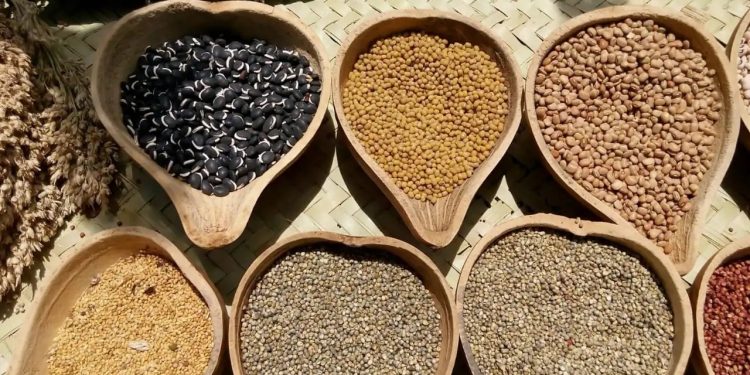
Critics however argue that the Seeds and Plant Varieties Act (2012) disproportionately impacts smallholder farmers in Kenya, as they may not have the resources or knowledge to navigate the certification process. Consequently, these farmers may be unable to access a diverse range of seeds and plant varieties, which could potentially limit their ability to grow food to feed their families or for minimal trading purposes. Other critics argue that the Act may discourage the use of indigenous seeds, which have cultural and historical significance for smallholder farmers in Kenya. These seeds and plant varieties may have unique traits that are well-suited to local growing conditions and are resilient to pests and diseases. Prohibiting their distribution within these localities could lead to loss of biodiversity
in Kenya’s agricultural sector and the ability of smallholder farmers to grow food in a sustainable way hence threatening food security among the rural communities.
The Act has drawn criticism for giving huge seed companies and multinational corporations a disproportionate amount of power over Kenya’s indigenous and commercial seed market. These companies frequently generate patented seeds and plant varieties that can only be used with the owner’s consent. Presently, there is an online campaign by civil society group known as GreenPeace Africa that is seeking signatures to compel the Government of Kenya to ammend the Act which they have described as ‘punitive’. As at noon 8th January 2023, the campaign had attracted 14,989 signatures.
Implications
The implication of this is that the smallholder farmers in Kenya are prohibited from sharing amongst themselves or commercializing indigenous seeds and plant varieties, where they are not registered with KEPHIS. Should farmers be forced to buy patented seeds and plant varieties, this would imply that, unlike in the past, smallholder farmers are unable to save seeds from their own crops and sow them in subsequent growing seasons. Instead, they must purchase seeds from these companies every year, which can be costly and may not be feasible for many smallholder farmers.
Conclusion
It is a known fact that indigenous plants hold unique and rich nutritional value. Further, the plants are easier to cultivate as most of them require minimum farm inputs such as fertilizers. The use of indigenous seeds can be an important part of sustainable agriculture and food security, as these seeds are often well adapted to the local growing conditions and can help to maintain genetic diversity within a crop. As a matter of fact, many organizations and governments around the world are working to support the conservation and use of indigenous seeds as a means of promoting sustainable agriculture and food security.
Recommendation
Acknowledging the regulatory function that the Seeds and Plant Varieties Act (2012) serve, we recommend that a review process of the Act and its enabling regulations be initiated with a view of making it friendly to the smallholder farmers and rural communities in the country; if it has not started already. In the revised Act, it is proposed that there be established a separate certification process for indigenous seeds and plant varieties, which could take into account the unique characteristics and cultural significance of these seeds. This could help to ensure that smallholder farmers are able to access a diverse range of seeds and plant varieties that are well-suited to their needs, financial capacity and local growing conditions. Alternatively, an amendment clause can be added to the Act to allow for the use of indigenous seeds without certification.
Moreover, there should be a provision to introduce strategic interventions such as mandating KEPHIS to certify indigenous seeds and plant varieties at the cost of the government and to establish seed banks for indigenous seeds and plant varieties. Finally, the revised Act should have a provision of knowledge dissemination and training to smallholder farmers on the certification process, to help them understand the requirements and how to apply for certification. This could be done through extension services or other agricultural support programs and seed exchange programs among rural communities.
Authored by Mercy Limbua and Tamara Aoko. The views expressed herein are of the Authors and not of CPSI International Society or its affiliates.